
How AI Copilots Actually Earn Their Keep in Production
Most AI copilots demo well and ship poorly. Here's the engineering that separates a flashy prototype from a copilot people trust every day.

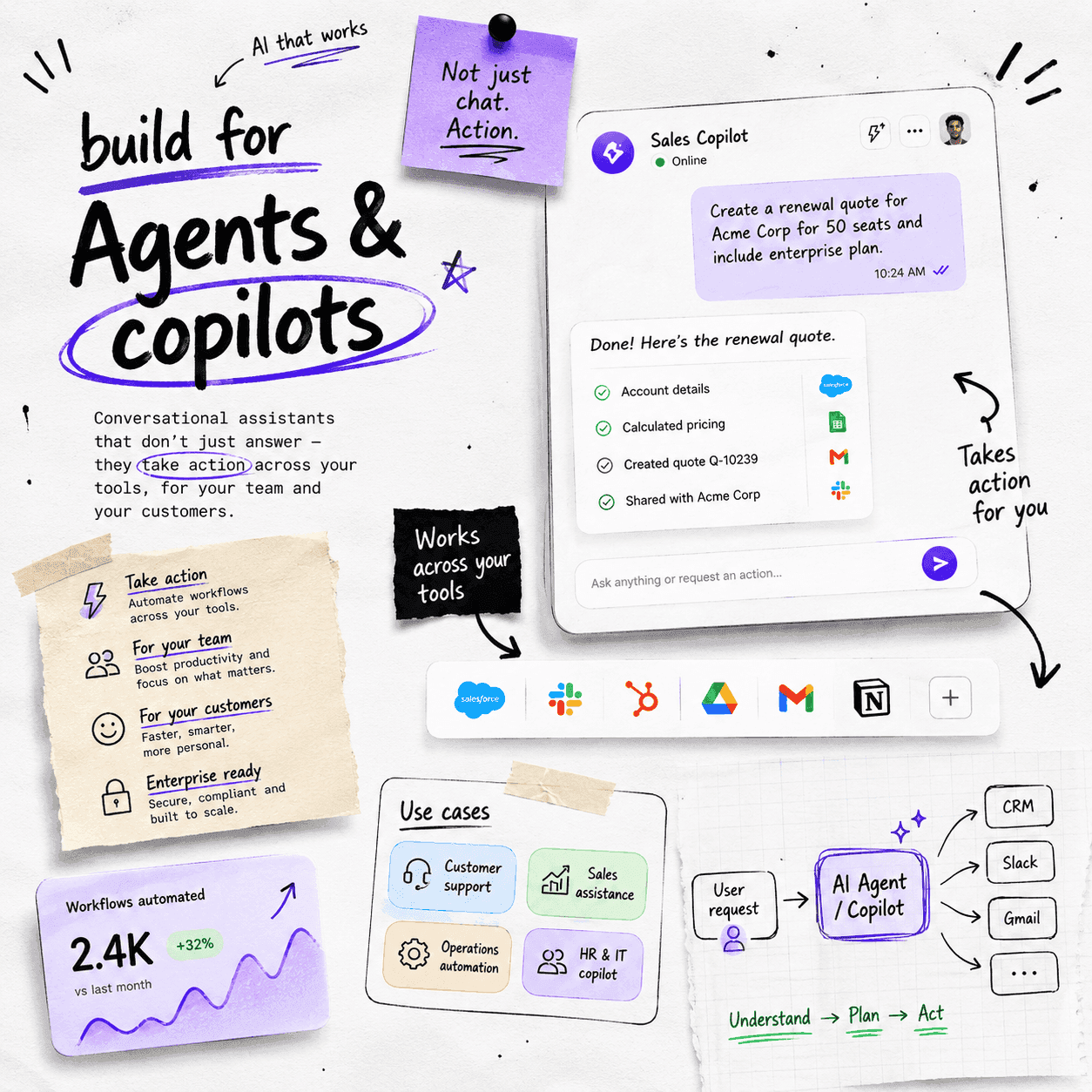
A copilot is easy to demo and hard to trust. In a five-minute walkthrough almost anything looks magical; the model answers, the room nods, the deal moves forward. The gap shows up three weeks later, when real users ask real questions and the copilot confidently invents an answer. The difference between a demo and a product isn't the model — it's everything wrapped around it.
Scope before you scale
The first mistake teams make is building a copilot that does everything. A copilot that answers any question about your entire business is a copilot that's wrong in a thousand small ways. The ones that earn their keep are narrow: they live inside one workflow, know one domain deeply, and say "I don't know" everywhere else. Narrow scope is not a limitation — it's the feature that makes trust possible.
Pick a job, not a surface
Don't ship "a chatbot in the dashboard." Ship "draft the customer reply," "explain this invoice," or "find the clause that covers refunds." A copilot tied to a specific job has a measurable success state, which means you can actually tell whether it's working.
Ground every answer
The single biggest driver of trust is grounding: every claim the copilot makes should trace back to a source it was given, not to the model's memory. Retrieval, citations, and a hard rule that the model only answers from provided context turn a confident guesser into a reliable assistant. When users can click through to the source, they forgive the occasional miss — because they can verify.
- Retrieve the right context first, then let the model write — never the other way around
- Show citations inline so every answer is checkable in one click
- Make "I couldn't find that" a first-class, well-designed response
- Log the retrieved context with every answer so you can debug failures later
Design for the wrong answer
Non-deterministic systems will be wrong sometimes; that's not a bug to eliminate but a reality to design around. Give users an easy way to correct, undo, or escalate. Keep a human in the loop for high-stakes actions. The copilots people keep using aren't the ones that are never wrong — they're the ones that make being wrong cheap and recoverable.
“Users don't need a copilot that's always right. They need one that's honest about what it knows and easy to correct when it isn't.”
Measure it like software
You wouldn't ship a service without monitoring, and a copilot is no different. Build an eval set of real questions with known-good answers, run it on every change, and track accuracy, grounding rate, and escalation rate over time. "It feels better" is not a metric. The teams that win treat their copilot like a measurable system, not a magic box — and that discipline is exactly what we build into every AI engagement at Atyuttama.

Keep reading
RAG in the Real World: Retrieval That Doesn't Hallucinate
Retrieval-augmented generation is simple to start and brutal to get right. A practical look at chunking, ranking, and the failure modes nobody warns you about.
ReadAI EngineeringEvals Before Vibes: Measuring AI You Can Trust
"It feels better" isn't a metric. How to build evaluation sets that turn AI development from guesswork into engineering.
ReadAI EngineeringShipping AI Features in Your Web App Without the Bloat
Adding AI to a product is easy to do badly. Streaming, error states, and cost control patterns for AI features that feel fast and stay cheap.
Read